Aegilops longissima
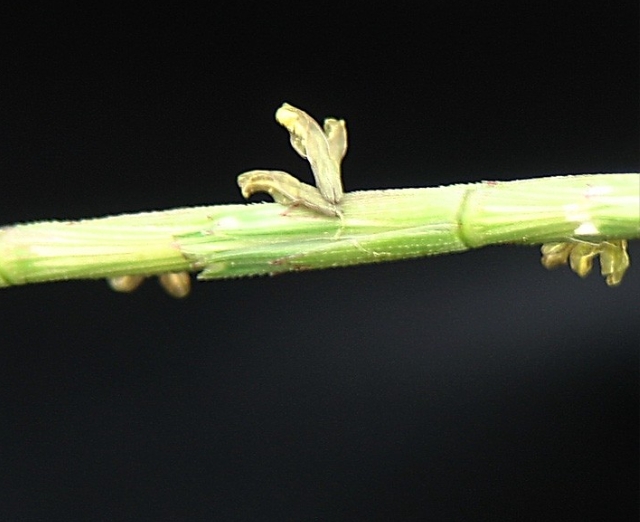
Aegilops longissima, a wild diploid grass with chromosome group S1, originates in the Eastern Mediterranean. Reaching 50-120 cm in height, it bears slender spikes that fragment when mature, with 8-15 spikelets per node. It grows in diverse soils across grasslands and fields at 0-900m elevation. As a progenitor of some cultivated wheats, its key value lies in specific accessions containing genes that inhibit the Ph1 pairing control gene in common wheat and durum wheat. This enables direct chromosome pairing with wheat relatives, making it a vital genetic resource for transferring traits like disease resistance into wheat breeding programs.
Species Information
Taxonomic Details
| Species: | Aegilops longissima |
| Abbreviation: | Ae. longissima |
| Ploidy: | Diploid |
| Chromosomes: | 14 |
| Accession: | TL05 |
Genomic Information
| Mature miRNAs: | 135 |
| miRNA loci: | 126 |
| Genome size: | 5.80 GB |
| Assembly: | ASM2160520v1 |
| Genome URL: | Ae. longissima Genome |
Explore Species Data
Pre-miRNA Length Distribution
Mature miRNA Length Distribution
Chromosome Distribution
(Note: CM038676.1 to CM038682.1 correspond to chromosomes 1 to 7, respectively.
JAHIAM denotes an unanchored sequence.)
Top 10 miRNA Families in Terms of Quantity