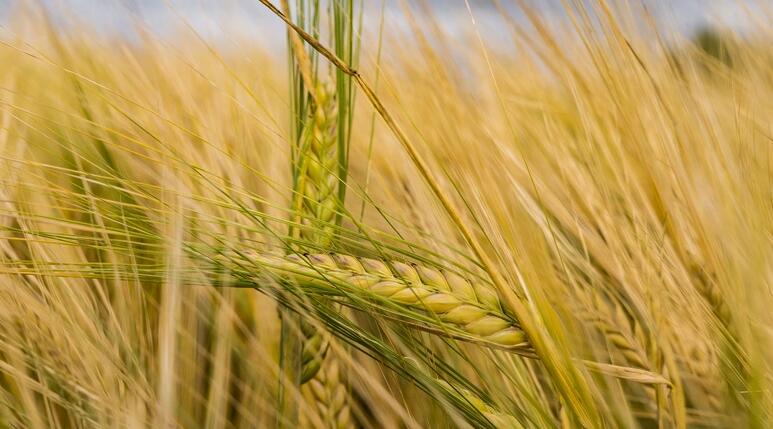
Barley (Hordeum vulgare L.), commonly known as hulled barley or naked barley (when referring to its qingke or hullless variety), is a temperate cereal crop domesticated from wild barley (H. vulgare subsp. spontaneum) in the Fertile Crescent ~10,000 years ago, coinciding with wheat domestication. It spread to China over 5,000 years ago, predating the Silk Road. Globally cultivated, barley serves as food (e.g., tsampa in Tibet), feed, and the primary raw material for brewing beer and whisky. Its wild progenitor harbors rich genetic diversity—particularly in drought tolerance and nutrient-use efficiency—which is actively leveraged in breeding programs. Modern research exploits wild and feral barleys (e.g., Tibetan weedy barley, derived via de-domestication) to enhance stress resilience and nutritional traits in cultivated varieties, supporting climate-smart agriculture.